
Contents
- 1 Best Free AI Tools for Blog Writing: The Ultimate $0 Workflow
- 1.1 Why Use Free AI Tools for Blogging?
- 1.2 Top 5 Best Free AI Tools for Blog Writing
- 1.3 Comparison Table: Free AI Tools for Blog Writing
- 1.4 The “Free Stack” Strategy: How to Use AI for Blog Writing at $0
- 1.5 Expert SEO Tips for AI Content (How to Stay Safe)
- 1.6 FAQs: Common Questions About Best Free AI Writing Tools for Blog Writing
- 1.7 Conclusion: Build Your Content Empire for $0
Best Free AI Tools for Blog Writing: The Ultimate $0 Workflow
If you think “free” means “low quality,” you are missing out. Using the best free AI tools for blog writing is the smartest way to scale your content without burning cash. In 2026, tech companies are giving away powerful features just to get you hooked—and you should take advantage of it.
Here is why smart bloggers use this stack:
- ⚡ Cut Writing Time: Turn a 4-hour task into a 1-hour sprint.
- 🚫 Kill Writer’s Block: Never stare at a blank page again. Let AI throw ideas at you until one sticks.
- 📈 Rank Higher: Tools like Writesonic and Gemini help you structure H2s exactly how Google wants them.
The Reality Check: Let’s be real. Free plans have limits (word counts or daily credits). The trick isn’t finding one perfect tool—it is using the right mix of tools to bypass those limits.
Why Use Free AI Tools for Blogging?
If you think “free” means “low quality,” think again. Using the best free AI tools for blog writing is the smartest way to scale your content without burning cash.
In 2026, the tech landscape is hyper-competitive. Companies are giving away powerful technology just to get you in the door—and you should take full advantage of it.
Here is why smart bloggers use this stack:
- Speed & Efficiency: AI can cut your writing time by 70%. What used to take four hours (researching, outlining, drafting) now takes just one.
- Kill Writer’s Block: Never start from zero. Treat AI as your creative partner that throws ideas at you until one sticks.
- SEO Advantage: Modern tools don’t just write; they understand keywords. They help you structure your H2s and H3s exactly how search engines like Google prefer.
The “Free Tier” Reality Check Let’s be realistic. Free plans do have limits, usually on word counts or daily messages. The trick isn’t to find one perfect tool (it doesn’t exist for free), but to use the right tool for the right job to bypass those limits.
Top 5 Best Free AI Tools for Blog Writing
I have tested dozens of platforms, but only these five offer genuine utility for a blogger who needs to publish consistent content without paying.
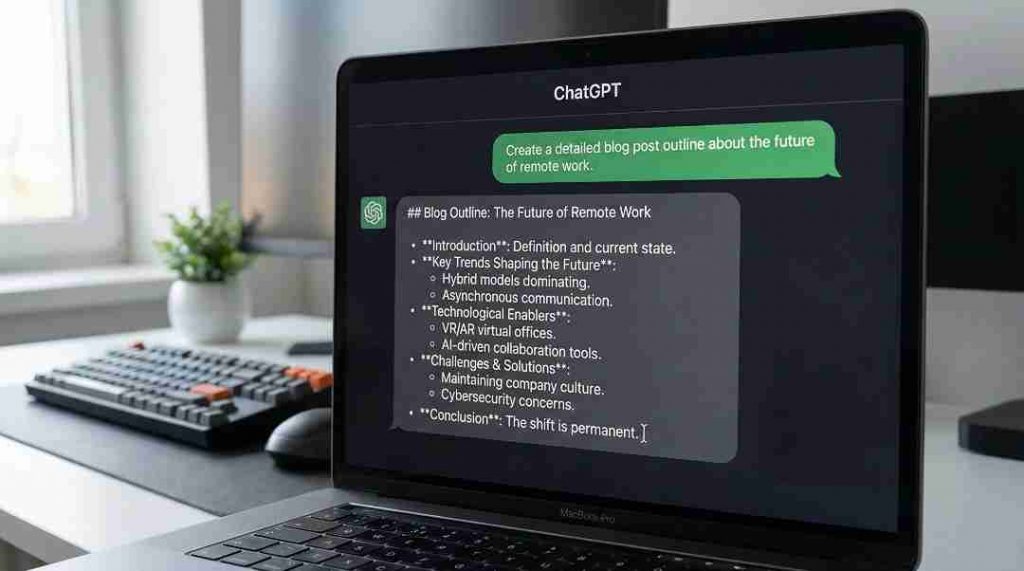
1. ChatGPT (OpenAI) – The Best All-Rounder
If you only use one tool, make it this one. In late 2026, ChatGPT’s free tier is incredibly generous. It gives you access to their flagship model (GPT-5) for limited messages and unlimited access to the ultra-fast GPT-Pro.
- Best For: Brainstorming ideas, creating semantic outlines, and simplifying complex topics.
- Free Limit: Limited GPT-5 resets every few hours; Unlimited GPT-Pro.
- Pros: Fast, versatile, and excellent at understanding context.
- Cons: Can sound robotic if you don’t use specific prompts.
2. Claude 3.5 Sonnet (Anthropic) – The Human Writer
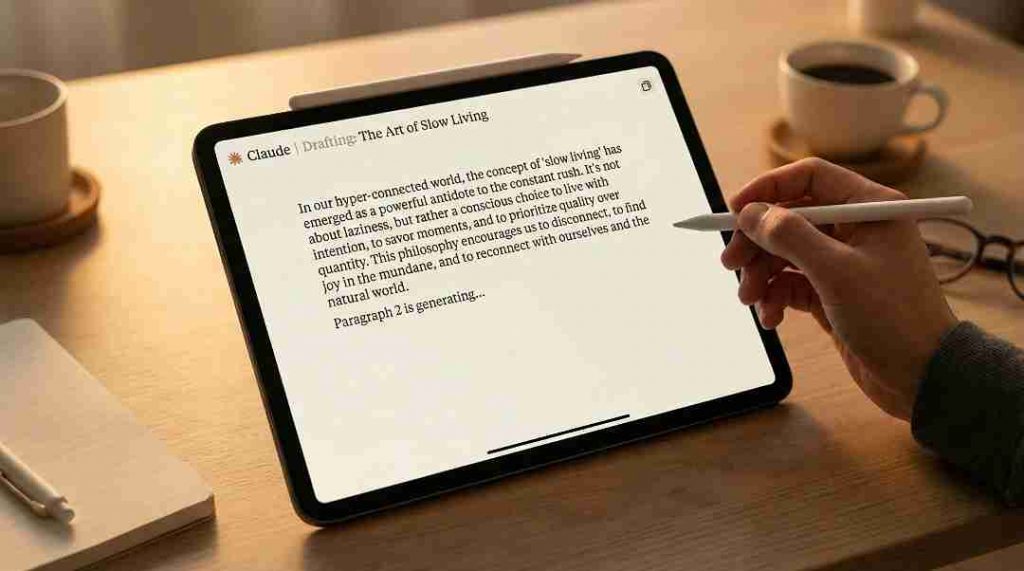
Claude is the writer’s favorite AI. While ChatGPT acts like a smart assistant, Claude feels like a talented human writer. It understands nuance, tone, and flow better than any other model on this list.
- Best For: Drafting the actual body content. It writes natural, engaging sentences that rarely need heavy editing.
- Free Limit: Strict daily limits (approx. 5–10 messages per 5 hours).
- Pros: The most “human” output available for $0.
- Cons: You will hit the limit quickly. Pro Tip: Use it for drafting only, not brainstorming.
3. Google Gemini (2.5 Flash) – The Research King
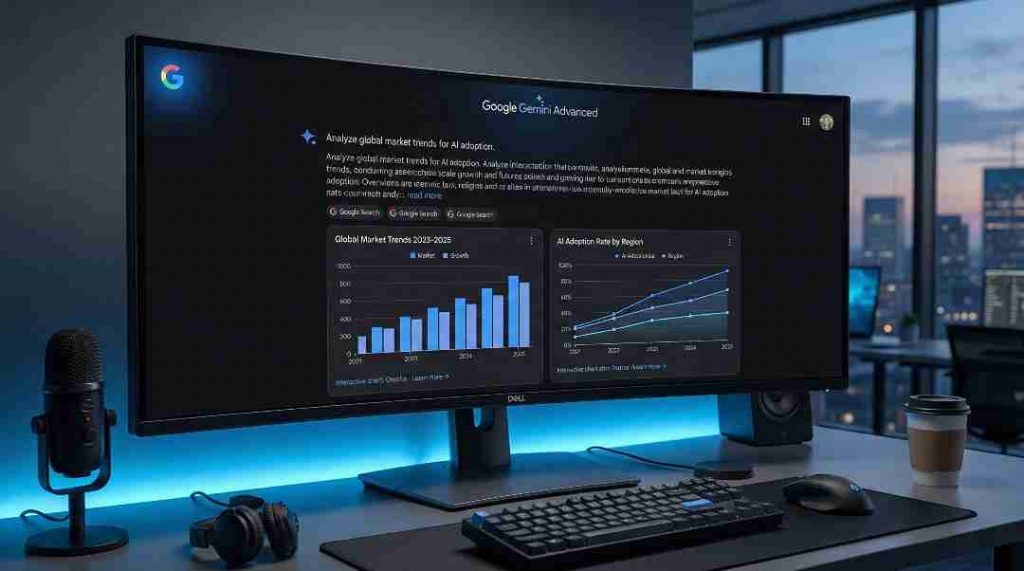
Gemini (formerly Bard) has a superpower the others don’t: it connects to Google Search in real-time. It doesn’t just guess facts; it finds them.
- Best For: Fact-checking, finding current statistics (2026 data), and researching trending topics.
- Free Limit: Very generous daily limits; rarely runs out for standard use.
- Pros: Citations often include direct links to sources; integrates with Google Docs.
- Cons: The writing style can be drier and more factual than Claude.
4. Writesonic – The SEO Specialist
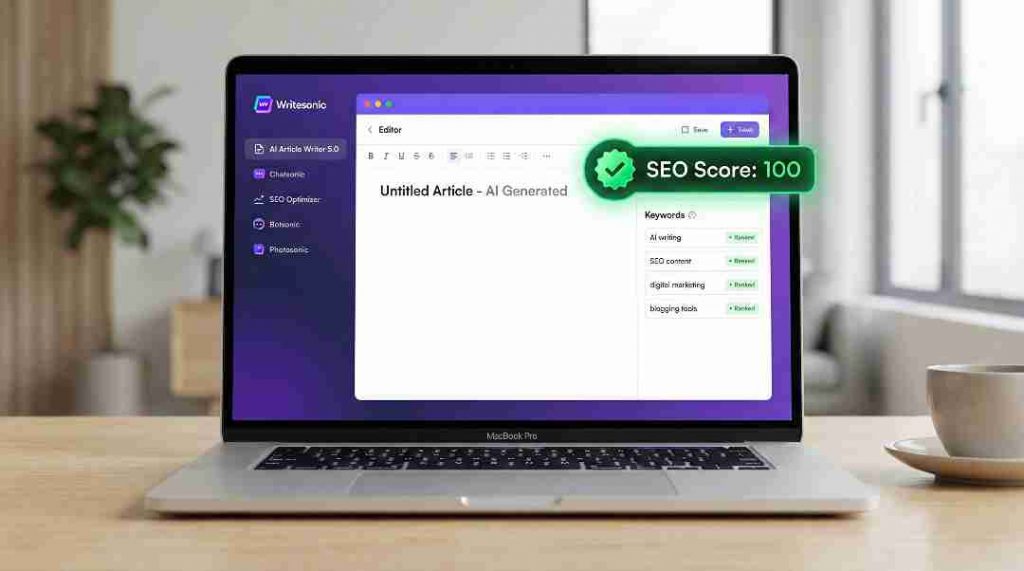
Writesonic is built specifically for marketers, not just chatters. Its free plan is tighter, but its templates are designed to rank on Google.
- Best For: Generating SEO meta descriptions, catchy titles, and structured article intros.
- Free Limit: 25 credits/month (roughly 10,000 words).
- Pros: Built-in SEO tools help you target keywords automatically.
- Cons: The monthly credit limit is too low to write daily articles.
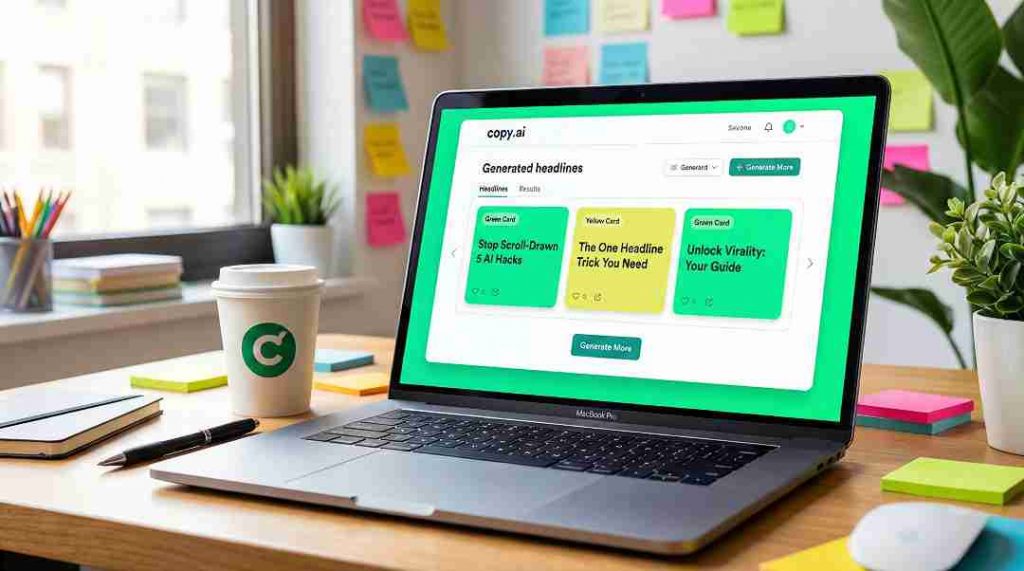
5. Copy.ai – The Marketing Copywriter
If you struggle with “hooking” your reader, Copy.ai is your solution. It excels at short-form copy that grabs attention immediately.
- Best For: Writing catchy blog introductions, social media promo posts, and newsletter emails.
- Free Limit: 2,000 words per month.
- Pros: Great templates for specific tasks (e.g., “Hook Generator”).
- Cons: Not suitable for writing full long-form articles due to the word cap.
Comparison Table: Free AI Tools for Blog Writing
| Tool Name | Best Use Case | Free Model Strength | Primary Limitation |
| ChatGPT | Outlining & Structure | High Logic & Reasoning | Generic / Robotic Tone |
| Claude | Drafting Body Content | Human-like Flow & Nuance | Low Daily Message Limit |
| Gemini | Research & Fact-Checking | Real-time Data Access | Dry / Factual Writing Style |
| Writesonic | SEO & Meta Tags | Keyword Optimization Focus | Low Monthly Word Count |
| Copy.ai | Intros & Social Hooks | Persuasive Marketing Copy | 2,000 Word/Mo Limit |
The “Free Stack” Strategy: How to Use AI for Blog Writing at $0
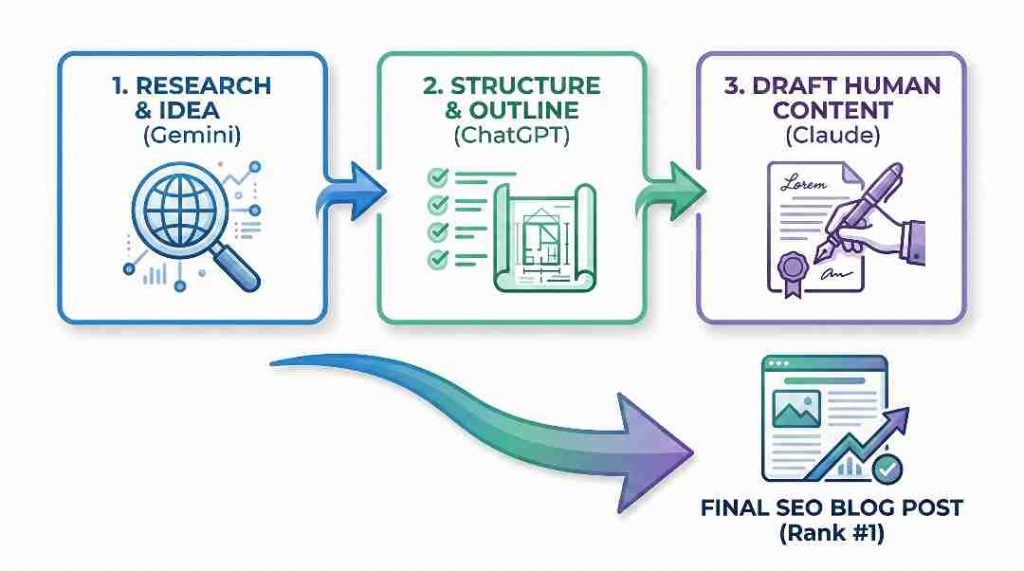
Here is the secret sauce. Most beginners fail because they try to write a whole article in one tool. The result? They hit word limits, or the AI starts rambling.
Instead, use this “Stack Strategy” to combine the best free AI tools for blog writing and bypass those restrictions.
Step 1: Ideation & Research (Use Gemini)
Start with Google Gemini. Since it has live web access, it gives you fresh data that ChatGPT (Free) often misses.
Ask Gemini: “Find me 5 trending sub-topics related to [Your Niche] for late 2026. Include recent statistics and sources.”
- Why: You get accurate facts, not hallucinations. (You can also validate these with other [free keyword research tools]).
Step 2: The Skeleton (Use ChatGPT)
Take those facts to ChatGPT (GPT-Pro). It excels at logic and structure.
📝 Ask ChatGPT: “Create a detailed, SEO-optimized blog outline based on these facts. Include H2s, H3s, and bullet points for a logical flow.”
- Why: It organizes your thoughts perfectly in seconds.
Step 3: The First Draft (Use Claude)
This is crucial. Take one section of your outline at a time and paste it into Claude 3.5 Sonnet.
📝 Ask Claude: “Write Section 1 of this blog post using a conversational, human tone. Avoid robotic jargon.”
- Why: Claude writes the most natural sentences. By doing it piece-by-piece, you get high-quality text without hitting the daily message limit immediately.
Step 4: SEO Optimization (Manual Polish)
Copy the text into WordPress. Use a plugin like [Rank Math] to check your keyword density.
- The Human Touch: AI is great at writing, but your human eye is needed to ensure keywords fit naturally. Add your internal links and personal stories here.
Expert SEO Tips for AI Content (How to Stay Safe)
Using AI is easy; ranking AI content is a skill. Google has officially stated that it does not hate AI content, it hates lazy content. If your blog post adds value, it will likely rank higher.
Follow these 3 Golden Rules to keep your site safe from penalties:
1. The “Human Touch” Rule (E-E-A-T)
Never use the raw AI-generated introduction. Readers decide in 3 seconds if they want to stay.
- The Mistake: Copy-pasting a generic “In this digital landscape…” intro.
- The Fix: Write the first 50 words yourself. Add a personal story, a strong opinion, or a “behind-the-scenes” detail that AI cannot know. This signals Experience, which is a key ranking factor in 2026.
2. Fact-Checking is Mandatory (Trust)
AI “hallucinates” (makes things up) confidently.
- The Risk: If Gemini says “80% of bloggers use AI,” it might be citing a study or making it up entirely.
- The Fix: Verify every statistic. If you can’t find the source, delete the stat. One fake fact can destroy your site’s reputation.
3. Tone Consistency (The Flow Check)
If you switch between ChatGPT (logical) and Claude (creative) in the same post, the tone will shift awkwardly.
- The Fix: Read your final draft out loud. If a sentence sounds robotic, rewrite it.
Need help smoothing out the edges? We have a full guide on [internal link] to make it sound 100% human and pass detection tools.
FAQs: Common Questions About Best Free AI Writing Tools for Blog Writing
Q1: Is AI-generated content good for SEO? A: Yes, but only if it provides unique value. Google has officially stated that it rewards high-quality content regardless of how it is produced. As confirmed in “https://developers.google.com/search/blog/2023/02/google-search-and-ai-content“, using automation is not against guidelines as long as it is helpful, people-first, and fact-checked.
Q2: Which free AI tool writes the most human-like text? A: Claude 3.5 Sonnet is currently the leader. Unlike ChatGPT, which can sometimes feel formulaic or repetitive, Claude excels at nuance, tone, and natural sentence flow, making it the best choice for drafting actual blog posts.
Q3: Do I need to disclose that I used AI on my blog? A: It is not legally required for general blogs, but it is ethical. Transparency builds trust. You can add a simple footer note like: “Assisted by AI, edited by humans.” However, Google recommends disclosures if you are publishing news or sensitive information where the “author” matters.
Q4: Can I use ChatGPT for keyword research? A: Yes for brainstorming, but NO for search volume. ChatGPT is great for finding topics (e.g., “vegan recipes”), but it cannot give you accurate monthly search volume numbers. For real data, stick to tools like Google Trends or Ahrefs Webmaster Tools.
Q5: What is the difference between GPT-4o and Claude Sonnet? A: Think of GPT-4o as the “Architect” and Claude as the “Writer.” GPT-4o is superior at logic, structuring outlines, and following complex instructions. Claude Sonnet is superior at creative writing, matching tone, and reducing robotic fluff.
Conclusion: Build Your Content Empire for $0
Let’s be real: You don’t need a $50/month subscription to build a successful blog in 2026.
By intelligently using the best free AI tools for blog writing, Gemini for research, ChatGPT for structure, and Claude for human-like drafting, you can produce content that rivals the pros without spending a dime.
The tools are ready. The “Free AI Stack” strategy is proven. The only missing piece is your action.
Your Immediate Action Plan
Don’t just close this tab. Start creating right now:
- Step 1: Sign up for the free versions of Claude 3.5 and ChatGPT.
- Step 2: Open Gemini and research 3 trending topics for your niche.
- Step 3: Commit to writing one blog post this week using the Stack Strategy.
Which tool are you most excited to try? Is it Claude for its writing style, or Gemini for its research power?
Let me know in the comments below!
Need direct links to everything mentioned? Check out our curated AI Tools Page to bookmark all the software in one place.